Emergency Kit Checklist: What to Keep at Home and Where to Store It
A practical emergency-kit checklist covering home supplies, go bags, car kits, documents, expiration dates, and where to store everything so you can find it fast.
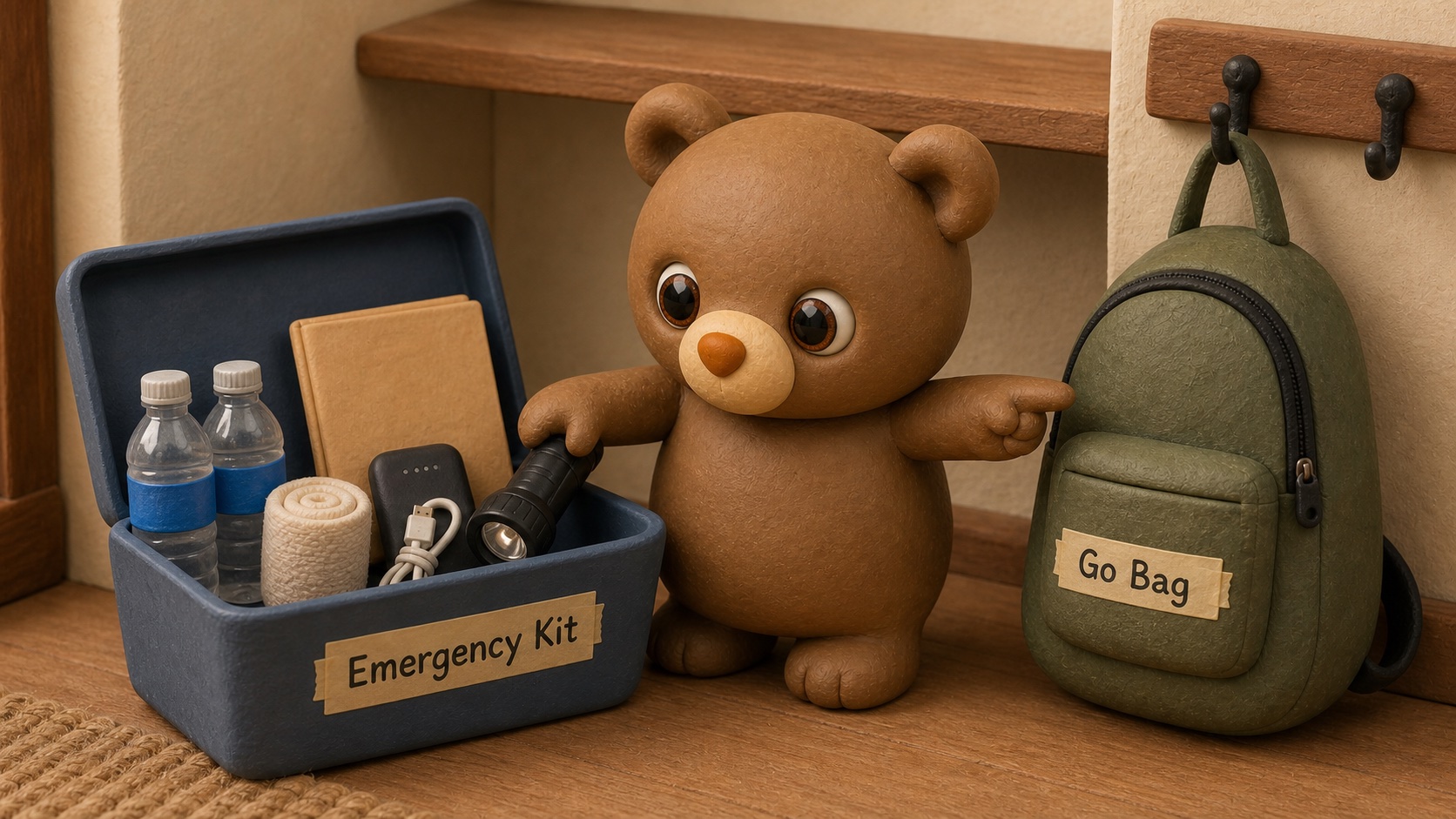
An emergency kit is only useful if you can find it when things get weird. Supplies scattered across three closets, a garage shelf, two junk drawers, and the trunk of a car are not a kit. They are a scavenger hunt with weather alerts.
The goal is simple: keep the right supplies, store them in sensible places, and make the locations obvious before you need them.
This checklist covers what to keep at home, what belongs in a go bag, what to keep in the car, and how to track where everything lives.
Start with the core home kit
Your home kit should cover basic needs for at least a short disruption: power outage, earthquake, storm, water shutoff, wildfire smoke, or anything else that makes normal errands temporarily impossible.
Start with:
- Water
- Shelf-stable food
- Flashlights or headlamps
- Extra batteries
- Battery bank or charging station
- First-aid kit
- Medications and copies of prescriptions
- Basic hygiene supplies
- Trash bags
- Manual can opener
- Work gloves
- Multi-tool or basic tool kit
- Copies of important documents
- Cash in small bills
- Pet supplies if needed
You can build from there. Do not let perfect preparedness stop you from creating a basic useful kit.
Water and food
A common guideline is to store enough water for each person for several days. If you cannot store that much, store what you reasonably can and note where it is.
Food should be easy to prepare and familiar enough that people will actually eat it. Think canned meals, protein bars, nut butter, crackers, shelf-stable snacks, baby food or formula if relevant, and pet food.
Write expiration dates somewhere you will review them. A preparedness bin full of expired protein bars is still better than nothing, but let us aim slightly higher than raccoon pantry.
Light, power, and communication
Power outages are easier when the basics are already grouped.
Keep flashlights, headlamps, lanterns, batteries, battery banks, charging cables, a car charger, and a radio if you use one.
Store at least one flashlight somewhere obvious, not buried under the emergency bin. If the lights go out, the flashlight inside a sealed tote in the garage is doing conceptual work only.
First aid and medication
Your first-aid supplies should be easy to find and not split across five bathroom drawers.
Include bandages, gauze, tape, antiseptic wipes, pain reliever, allergy medication, tweezers, a thermometer, gloves, and any household-specific medical supplies.
For medication, you may not be able to store large extras, but you can track what matters: names, doses, pharmacy, refill timing, and where backup supplies are kept.
Important documents
You do not need to store your entire life in a go bag, but you should know where key documents live.
Track passports, birth certificates, insurance policies, medical cards, emergency contacts, pet records, copies of IDs, house or car documents, and backup codes or recovery information if stored physically.
Some documents belong in a safe, some in a folder, some as digital copies. The important thing is that the location is known.
A useful path might be:
Main Home → Office Closet → Fireproof Box → Passports
That is much better than “somewhere safe,” the official motto of lost documents.
Go bag vs home kit vs car kit
Do not force every emergency supply into one place. Different situations need different kits.
Home kit
This is for staying put. It can be heavier and live in a closet, pantry, garage shelf, or utility room.
Go bag
This is for leaving quickly. Keep it lighter and more portable. Include essentials like documents, medication notes, chargers, water, snacks, basic first aid, and a change of clothes.
Car kit
This is for roadside trouble or being away from home. Include water, snacks, blanket, flashlight, first aid, phone charger, jumper cables or battery starter, and weather-specific gear.
If you use Cubby, treat each kit as its own storage location:
- Home → Hall Closet → Emergency Bin
- Car → Trunk → Roadside Kit
- Home → Bedroom Closet → Go Bag
Then tag related items with emergency, first aid, documents, power, or pet supplies.
Where to store emergency supplies
Good storage is accessible, dry, and memorable.
Useful locations include an entry closet, hall closet, pantry, laundry room shelf, garage shelf near the door, bedroom closet for go bags, and car trunk for roadside supplies.
Avoid places that are hard to access quickly or likely to be blocked. If your emergency kit is behind the holiday decorations, a broken suitcase, and a box labeled “maybe cables,” that is not accessible. That is a side quest.
Label the container clearly
Use boring labels. This is not the moment for aesthetic mystery.
Good labels include Emergency Kit, First Aid, Go Bag, Car Kit, Water, and Important Documents.
If you have multiple bins, number them:
EMERGENCY-01: Food + waterEMERGENCY-02: Power + first aidEMERGENCY-03: Documents + pet supplies
Add a photo of the open bin before closing it. Future-you will know what is inside without unpacking it.
Review schedule
Review your kit every six months. Put it near a seasonal habit you already have: daylight saving time, smoke detector checks, New Year reset, or back-to-school planning.
Check expired food, expired medication, battery charge, missing cables, clothing sizes for kids, pet food freshness, document updates, and water condition.
The review should take minutes, not an afternoon. If it is too hard to check, simplify the kit.
A simple first version
If you are starting from nothing, do this today:
- Pick one closet or shelf.
- Put water, flashlight, batteries, first-aid kit, snacks, and power bank in one bin.
- Label it
Emergency Kit. - Take a photo of the open bin.
- Save the location somewhere searchable.
That is enough to move from “we should really do that” to “we have a kit.”
Cubby helps with the part most people forget: remembering where supplies are after the ambitious organizing afternoon is over. Add the kit, attach photos, tag important items, and record the exact location. When you need the flashlight, you should not have to remember which version of yourself did the storing.
Preparation is not about becoming a bunker goblin. It is about making future panic a little less stupid.