Garage Inventory Checklist: Tools, Parts, Cables, and Hardware
A practical garage inventory checklist for tools, spare parts, cables, hardware, bins, and all the things you swear you just saw last week.
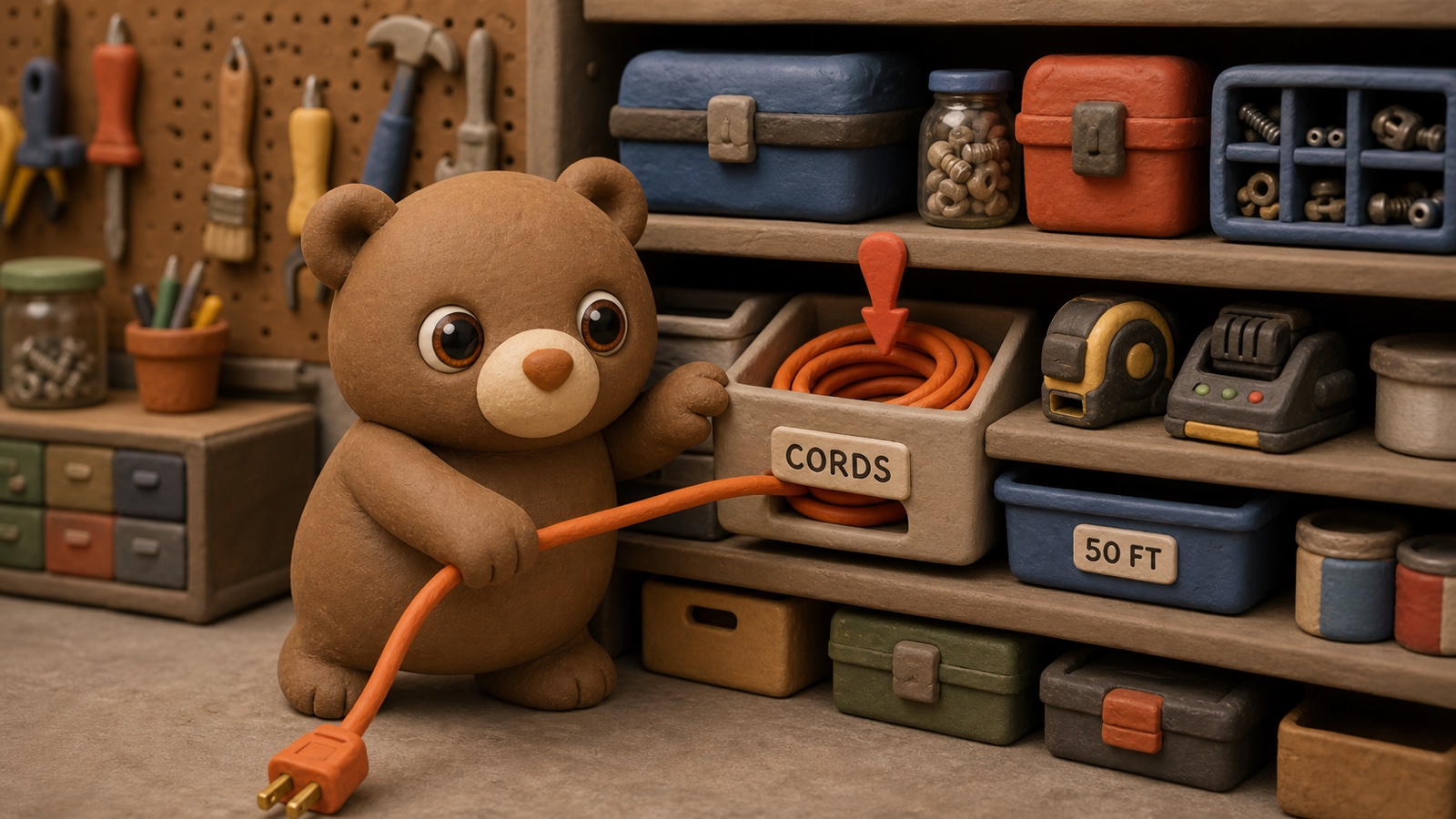
The garage is where useful things go to become folklore.
There is a drill battery somewhere. There are four kinds of tape, but never the one you need. A bin labeled “misc.” contains a curtain rod bracket, half a bag of zip ties, and a part that looks too important to throw away.
A garage inventory is not about turning your home into a warehouse. It is about saving your future Saturday from becoming an archaeological dig.
Use this garage inventory checklist to make your tools, parts, cables, hardware, and bins findable again.
First, make the garage searchable
For each item or container, capture three things:
- What it is: “impact driver,” “M6 bolts,” “orange extension cord.”
- Where it lives: garage, west wall, red toolbox, top drawer.
- What it looks like: one clear photo, especially for odd parts and lookalike cables.
Do not inventory every individual screw unless that brings you peace. Inventory the container: “assorted drywall anchors, clear organizer, workbench shelf.” The goal is to know whether you have something and where to find it.
A good rule: if you have bought it twice because you could not find the first one, it belongs in the inventory.
Tools checklist
Start with the tools you reach for most often, then work outward.
Hand tools
- Hammers and mallets
- Screwdriver sets and bit kits
- Wrenches, socket sets, and ratchets
- Pliers, wire cutters, and locking pliers
- Hex keys and Torx keys
- Utility knives and spare blades
- Tape measures, levels, squares, and stud finders
- Clamps, files, chisels, and pry bars
For tool sets, photograph the open case. It makes missing pieces obvious later, especially when the 10mm socket pursues independent living.
Power tools
- Drill and impact driver
- Circular saw, jigsaw, reciprocating saw, or miter saw
- Sander, grinder, or rotary tool
- Nail gun or stapler
- Shop vacuum
- Air compressor
- Battery chargers
- Spare batteries by brand and voltage
Record the brand, battery platform, and storage spot. “Makita 18V charger, garage pegboard, lower left” is much more useful than “charger somewhere near tools.” Photograph model labels for replacement blades, filters, and parts.
Yard, bike, and car tools
- Rake, shovel, loppers, and pruners
- Hose nozzles, sprinklers, and irrigation tools
- Tire inflator, pressure gauge, and jumper cables
- Car jack, jack stands, funnel, and oil pan
- Bike pump, chain lube, tire levers, and spare tubes
- Snow shovel, ice scraper, and salt spreader
These often drift between the garage, shed, porch, and car trunk. Give each one a recorded home, even if that home is “usually in the Subaru.”
Parts and supplies checklist
Parts are easy to keep and hard to identify later. Add project notes wherever you can.
Building and repair supplies
- Wood scraps worth keeping
- Drywall patch kits and sanding blocks
- Caulk, sealant, and construction adhesive
- Paint brushes, rollers, trays, tape, and drop cloths
- PVC fittings, pipe scraps, and hose clamps
- Electrical boxes, wire nuts, and outlet covers
- Door hardware, cabinet hinges, knobs, and pulls
- Felt pads, sliders, brackets, and furniture feet
For leftovers, add the room or project name: “bathroom vanity extra hinges” or “deck railing spare balusters.” Future you will not remember.
House-specific parts
- Refrigerator water filters
- Furnace or HVAC filters
- Vacuum bags and belts
- Light bulbs by type and fixture
- Remote controls and wall-mount hardware
- Assembly tools from furniture kits
- Extra keys, lock cores, and garage door parts
- Paper manuals, if you keep them
Photos are especially useful here. A picture of the filter size or bulb base prevents the classic hardware store ritual of guessing under fluorescent lights.
Cables, cords, and chargers checklist
Cables multiply quietly, then demand drawer space. Group them so you can answer “Do we have one of those?” in under ten seconds.
- Extension cords: indoor, outdoor, heavy-duty
- Power strips and surge protectors
- USB-A, USB-C, Lightning, and Micro-USB
- HDMI, DisplayPort, Ethernet, and coaxial
- Audio cables and adapters
- Battery tenders and specialty chargers
- Tool battery chargers
- Holiday light cords and timers
Bundle cables by type, then inventory the bundle. Add length when it matters: “50 ft outdoor extension cord, orange, garage wall hook.” Photograph odd adapters from both ends.
Hardware checklist
Hardware deserves structure because one coffee can of mixed fasteners is not storage. It is a dare.
- Wood, drywall, deck, and machine screws
- Nails and brads
- Bolts, nuts, washers, and lock washers
- Drywall, masonry, and toggle anchors
- Hooks, eye bolts, and cup hooks
- Zip ties, Velcro ties, and twist ties
- Picture-hanging hardware
- Pegboard hooks and shelf pins
- Furniture connectors and cam locks
Use small bins or organizers if you have them, but do not wait for perfect containers. A labeled jar is better than a dream system you never start. Name the container and location: “stainless screws, yellow organizer, workbench middle shelf.”
Storage bins and seasonal gear
Garage bins are where labels go to become lies. “Camping” slowly absorbs pool parts, one Christmas extension cord, and a poncho from 2009.
Inventory bins at the bin level, with a photo of the contents before you close the lid.
- Camping gear
- Sports equipment
- Pool and beach supplies
- Holiday lights and decorations
- Car cleaning supplies
- Painting supplies
- Garden chemicals and pest control
- Tarps, bungees, straps, and rope
- Kids’ outdoor toys
If a bin contains things you need once a year, photos are a gift. You can check inside without pulling down six tubs.
Use locations that match real life
A garage inventory works best when locations are specific but not fussy. Think in layers:
- Home: “House”
- Room: “Garage”
- Area: “North wall” or “Workbench”
- Container: “Blue bin” or “Red toolbox”
- Nested spot: “Top drawer” or “Left compartment”
This is where Cubby fits naturally. In Cubby, you can create your home, add the garage as a room, then nest storage locations like workbench, pegboard, toolbox, shelf, and individual bins. Add photos, tags like “electrical,” “bike,” or “paint,” and search later when you need the thing instead of the entire garage experience. iCloud keeps it synced, so the answer is still there when you are at the store deciding whether to buy yet another pack of drywall anchors.
Keep it current without making it a chore
Do not try to finish the whole garage in one heroic afternoon. Pick one zone: the tool chest, cable bin, workbench, or one shelf. Group similar items, toss obvious trash, photograph what remains, add names and locations, then put everything back where you recorded it.
When you use the last furnace filter, update the quantity. When you move the socket set to the rolling cart, change the location. When you create a new bin, photograph it before it disappears into the shelf stack.
Start with ten things. Make them searchable. That is enough to turn the garage from a rumor mill into a place where useful things can actually be found.