Moving Box Labels: A Simple Numbering System That Makes Unpacking Easier
A practical moving-box labeling system using room codes, box numbers, priority labels, and searchable contents so you can find what you packed.
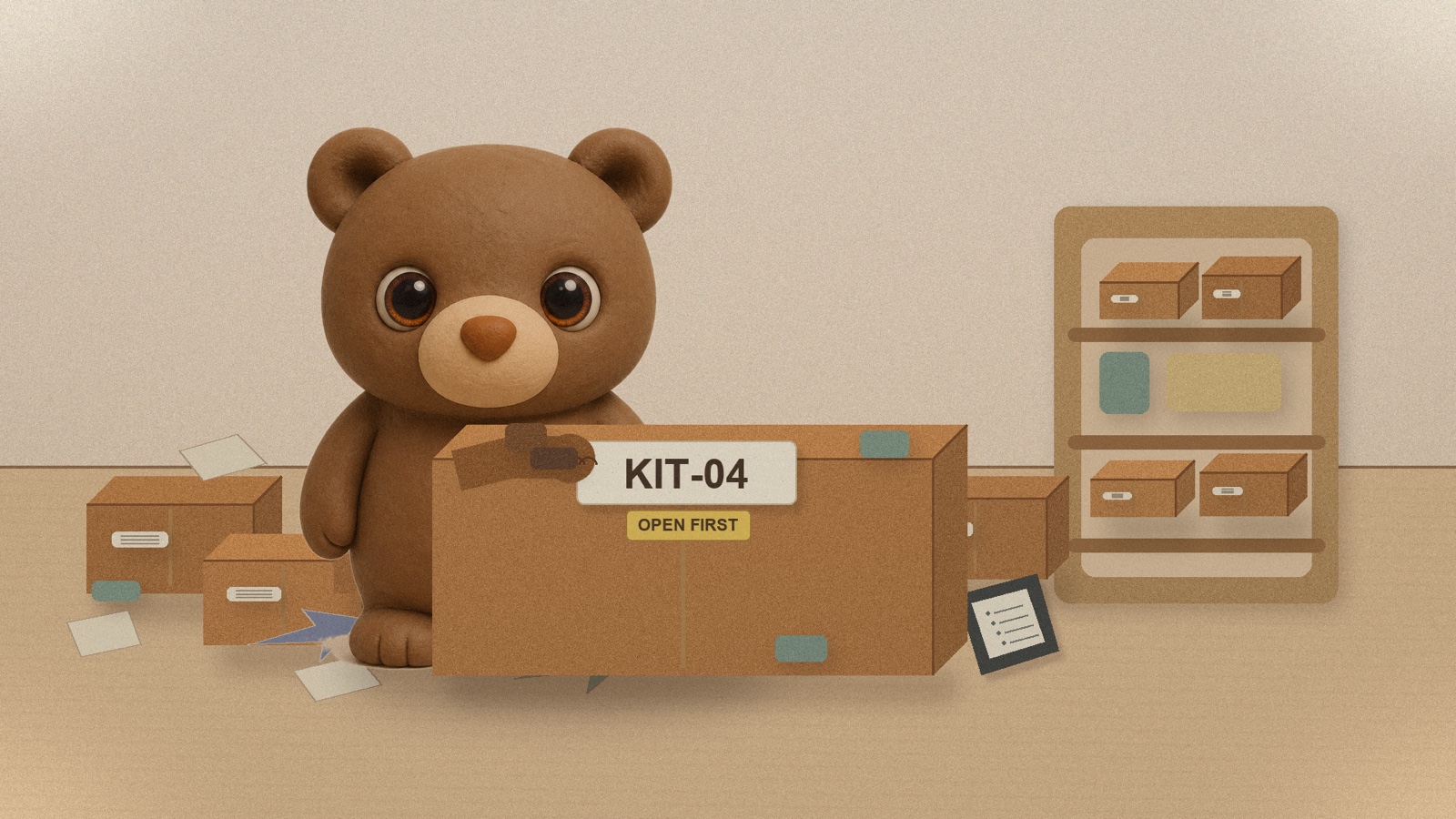
The worst moving-box label is “misc.” The second worst is “kitchen,” written on one side of a box that is now wedged behind six other boxes also labeled “kitchen.” This is how people end up buying a new can opener while the original waits patiently in a cardboard crypt.
Good moving labels do three things:
- Tell movers where the box goes.
- Tell you how urgently to open it.
- Let you find one item without opening every box in the room.
You do not need a complicated system. You need a consistent one.
Use room codes instead of full room names
Start with short room codes. They are faster to write, easier to scan, and work well with box numbers.
Example codes:
KIT— KitchenBED— BedroomBTH— BathroomLIV— Living roomOFF— OfficeGAR— GarageSTO— StorageKID— Kids roomGUE— Guest room
Then number every box in that room: KIT-01, KIT-02, BED-01, GAR-07.
This gives every box a unique name. That is the whole magic trick. Once a box has a unique name, you can track what is inside it.
Write the label on the top and two sides
A label on the top is useful until boxes are stacked. A label on one side is useful until that side faces a wall.
Label three places:
- Top
- Short side
- Long side
Use thick marker or printed labels. Tiny careful handwriting has no place in the sweaty final hour of moving day.
Add a priority mark
Every box should have a priority level:
OPEN FIRST— things you need in the first 24 hoursWEEK ONE— things you need soon, but not immediatelyLATER— seasonal, backup, decorative, or rarely used
An “open first” box is not a cute idea. It is the difference between sleeping with sheets and discovering at midnight that your bedding is in BED-09, which is somehow under the espresso machine.
Good open-first boxes include toiletries, chargers, medications, paper towels, trash bags, a box cutter, pet food, bedding, towels, and router/modem gear.
Keep private details off the outside of the box
Do not write “jewelry,” “passport,” “camera,” or “expensive laptop stuff” on the outside of a moving box. The label should help route the box, not advertise its contents.
Use a neutral label on the box and keep the detailed contents in your inventory.
For example:
- Outside label:
BED-03 · WEEK ONE - Private inventory: “winter sweaters, passport folder, spare sunglasses, watch box”
This is especially important if movers, storage facilities, shared buildings, or helpful-but-chaotic relatives are involved.
Track contents by box, not by item perfection
You do not need to list every fork. Track the things you will actually search for later.
For each box, record the box ID, destination room, priority, broad category, key items, photo of the open box before sealing, and notes like fragile, heavy, liquids, cables, or documents.
Example:
KIT-04— Pantry overflow. Olive oil, baking supplies, spices, coffee filters. Heavy. Open week one.
A photo is often faster than typing. Open box, take picture, add a few searchable words, close box. Done.
Use a simple color system if it helps movers
Color can help route boxes quickly: blue tape for kitchen, green tape for bedroom, yellow tape for bathroom, red tape for open-first boxes.
But do not rely on color alone. Tape falls off. People forget what colors mean. Room code plus number is still the source of truth.
Create a box map for the new place
Before moving day, decide where boxes should land. “Kitchen” is obvious. “Storage” is not.
If you have a garage, basement, or storage room, divide it into zones: front left shelf, back wall, seasonal corner, tool cabinet, holiday bins, donation pile.
Then your inventory can say:
GAR-07→ New Home → Garage → Back Wall → Lower Shelf
That makes unpacking less like archaeology.
How Cubby fits into a moving system
Cubby is useful because it thinks in nested places. A box can start as a moving box and later become a storage location.
During the move:
Apartment → Moving Boxes → KIT-04
After the move:
New Home → Kitchen → Pantry → Top Shelf
Or, if the box stays packed:
New Home → Garage → Metal Shelf → KIT-04
Add photos and tags like open first, fragile, documents, holiday, tools, or cables. Later, search for “router” or “spatula” instead of opening every box with the grim determination of a raccoon.
The actual labeling recipe
Use this format:
ROOM-NUMBER · PRIORITY · DESTINATION
Examples:
KIT-01 · OPEN FIRST · Kitchen counterBED-02 · WEEK ONE · Bedroom closetOFF-03 · LATER · Office shelfGAR-08 · LATER · Garage back wall
Then keep the detailed contents somewhere searchable.
What to label first
If you are already mid-move and do not have time to be perfect, label these first: open-first boxes, documents, electronics and cables, kitchen essentials, hardware, tools, screws, brackets, furniture parts, and seasonal boxes likely to remain packed.
Furniture parts deserve special treatment. Tape screws and hardware to the furniture when possible. If not, create one clearly labeled hardware box and photograph every bag before it goes in.
The rule that saves the most time
Never close a box until it has a unique ID.
That is it. If you do nothing else, do that. A unique ID turns a pile of cardboard into a system. A searchable note, spreadsheet, or app can then tell you what KIT-04 means.
Moving is always a little feral. A box numbering system will not make it elegant. It will, however, stop you from opening twelve boxes to find the one thing you need to make coffee. Some standards are worth defending.