Moving Inventory Checklist: How to Track Every Box, Room, and Item
A practical moving inventory checklist for tracking boxes, rooms, storage spots, and important items before, during, and after a move.
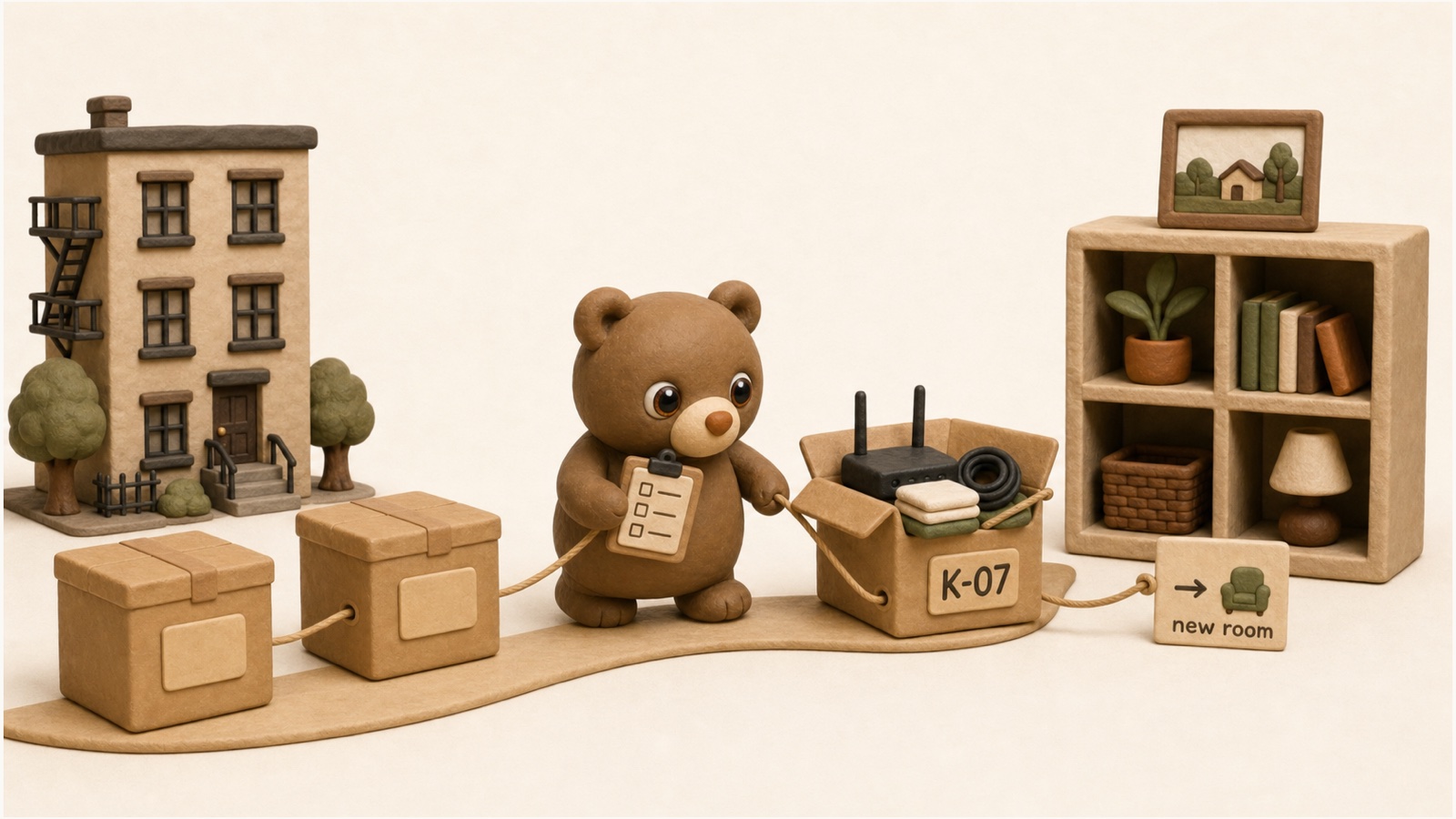
Moving day has a special talent for turning reasonable adults into people whispering, “Where did we put the can opener?” while eating crackers for dinner.
A moving inventory fixes that. Not in a clipboard-at-dawn way. A good moving inventory is simply a map: what you own, where it is packed, where it should land, and which things deserve extra attention.
Use this checklist before you tape the first box and when you are standing in the new kitchen surrounded by cardboard towers.
1. Start with rooms, not boxes
Before you inventory individual items, make a simple list of the spaces in your current home and your new one. This gives every item a starting point and a destination.
Include bedrooms, bathrooms, kitchen, pantry, living room, office, garage, attic, basement, closets, outdoor storage, and utility areas. If your new home has different spaces, note that too: “hall closet” might become “entry cabinet.”
The point is to avoid vague destinations like “miscellaneous,” which is less a location than a future argument.
2. Number every box
Every box needs a unique number. Not just “Kitchen” or “Books.” You want “Kitchen 03” or “K-03.”
A simple system works best:
- K-01, K-02, K-03 for kitchen
- BR1-01 for bedroom one
- OF-01 for office
- G-01 for garage
Write the number on at least two sides and the top of the box. If the label is only on the top, it will immediately be placed under six other boxes because moving trucks have a sense of humor.
Your inventory should connect that box number to its contents and destination room. That way, “K-07” means something useful: small appliances, measuring cups, hand mixer, goes to kitchen lower cabinet.
3. Record the useful contents, not every paperclip
You do not need to list every sock. You do need to list the things you will look for first, the things that are expensive, the things that are fragile, and the things that are easy to forget.
For each box, capture:
- Box number
- Current room
- Destination room
- General contents
- High-value or fragile items
- “Open first” status
- Notes about where it should live later
For example: K-04 goes to the kitchen and contains the coffee grinder, filters, mugs, and kettle. Mark it “open first.” That is enough detail to find what matters without turning packing into a second job.
4. Photograph boxes before sealing them
A quick photo of each box’s contents is one of the highest-return moving habits. Take the picture before you close the flaps, then take another of the labeled box.
Photos help when a label is smudged, when you cannot remember which “linens” box has the shower curtain, or when you need proof for movers or insurance.
Do not over-stage the photo. You just need a clear view of the contents and the label.
5. Make a separate list for valuables and documents
Some things should not disappear into the general cardboard ecosystem. Keep a separate inventory for items you will move yourself or track closely:
- Passports, birth certificates, and medical records
- Prescriptions
- Jewelry and watches
- Small electronics
- Backup drives
- Financial documents
- House closing paperwork or lease documents
- Sentimental items that cannot be replaced
- Keys, garage openers, and access cards
For each item, note where it is stored during the move: personal bag, locked case, car trunk, or fireproof document pouch. “Somewhere safe” is not a location. It is a spell people cast right before losing the thing.
6. Mark open-first boxes clearly
You will not unpack everything on day one. You will need to sleep, shower, charge a phone, feed people or pets, and make coffee if your household runs on hope and beans.
Create open-first boxes for bedding, towels, toiletries, toilet paper, basic cookware, plates, chargers, medications, pet supplies, cleaning basics, and a small tool kit.
Give these boxes a special tag or label, such as “OPEN FIRST,” and track them in your inventory. Load them last if possible so they come off the truck first.
7. Track nested storage locations
Moving inventory gets much more useful when it includes where things will live after the move, not just which room they are going to.
Instead of stopping at “Kitchen,” add the smaller home inside the room:
- Kitchen > pantry > top shelf
- Main bedroom > closet > left drawer
- Garage > metal shelf > bin 2
- Office > desk > cable drawer
- Entryway > bench > winter accessories basket
Nested locations prevent the classic post-move problem where you technically unpacked, but no one knows where anything went.
8. Use tags for cross-category items
Rooms are not always enough. Tags help you find items by use, urgency, season, or person.
Useful moving tags include open first, fragile, valuable, donate, sell, seasonal, baby, pet, tools, cables, paperwork, and holiday.
Tags also help when an item could belong to more than one room. A label maker might be packed from the office but needed in the kitchen, garage, and kids’ rooms. Tag it “tools” or “setup” so it is findable when you need it.
9. Check boxes in at the new place
When boxes arrive, check them off against your inventory before they vanish into rooms. Confirm that each numbered box made it off the truck and landed in the right area.
If a box is damaged, photograph it before opening. If something is missing, your inventory helps identify what was inside and whether it was loaded.
This step is especially useful if you are using movers, storage, a pod, or multiple vehicles.
10. Keep the inventory after the move
Do not delete your moving inventory the moment the last box is flattened. It becomes the start of your home inventory.
After you unpack, update box-based entries into permanent locations. “K-04 coffee grinder” becomes “Kitchen > appliance cabinet > lower shelf.” Add serial numbers for electronics, photos of valuables, warranty details, or purchase receipts when you have them.
This is where Cubby fits naturally. Cubby is built for remembering where things live: homes, rooms, nested storage locations, photos, tags, and fast search, synced with iCloud. Use it to track boxes during the move, then turn those entries into your everyday map for “Where did we put the spare key?”
No spreadsheet archaeology required.
A simple moving inventory checklist
- List current rooms and destination rooms
- Assign every box a unique number
- Write the number on multiple sides
- Record useful contents, not every tiny item
- Photograph contents before sealing boxes
- Keep valuables and documents on a separate list
- Label open-first boxes clearly
- Track nested locations for bins, drawers, shelves, and cabinets
- Add tags like fragile, valuable, seasonal, or paperwork
- Check boxes in when they arrive
- Photograph damage before unpacking
- Update temporary box locations into permanent home locations
A move is always going to have a little chaos in it. That is part of the ceremony. But with a moving inventory, the chaos has labels, photos, and a search bar. Future you will be grateful, probably while holding the can opener.