Storage Bin Labels: QR Codes vs Simple Numbered Labels
A practical guide to choosing between QR code labels and simple numbered labels for storage bins, attic boxes, garage shelves, and seasonal gear.
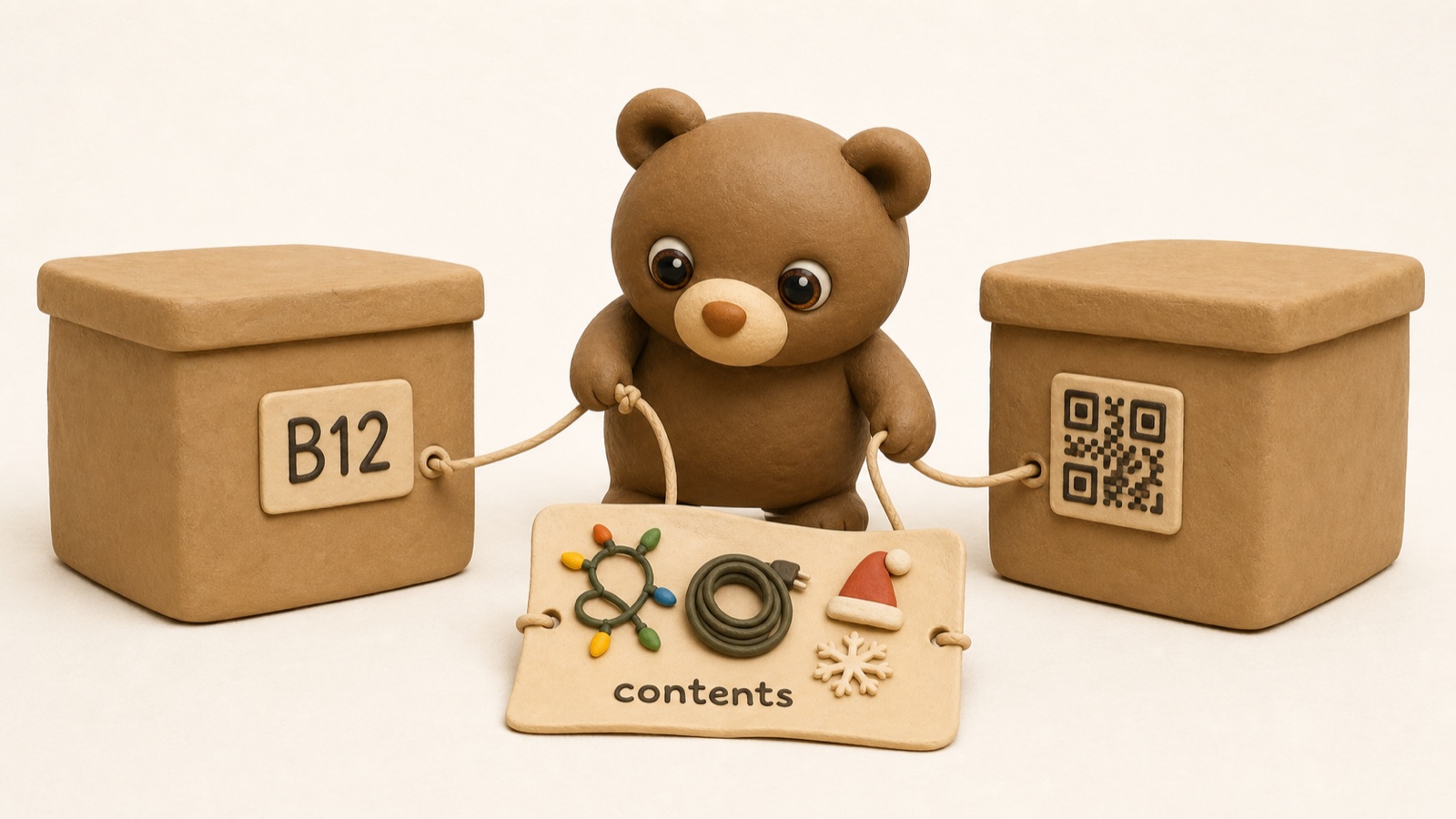
A storage bin label has one job: help Future You find the thing without opening six identical tubs.
The question is how fancy that label needs to be. QR code labels feel modern. Numbered labels feel almost suspiciously low-tech. Both can work. Both can fail. The right choice depends less on your printer and more on how your storage actually behaves: how often bins move, who needs to find things, and whether your system survives a tired Tuesday night in the garage.
The case for QR code labels
A QR code label puts a scannable link on the bin. Scan it with your phone, and it can open a note, spreadsheet row, app entry, shared document, or inventory page that lists what’s inside.
That’s useful when a bin contains too much to write on the outside: holiday decorations, kids’ clothes by size, camping gear, spare cables, craft supplies, or the mysterious category known as “miscellaneous but apparently important.” A QR code can connect the physical bin to a detailed digital record with photos, tags, notes, and updates.
QR labels are best when a bin is high, heavy, sealed, shared, or full of tiny things. They’re especially helpful for seasonal storage. A label that says “Christmas 04” is fine. A scan that shows “tree skirt, brass stocking hooks, outdoor timer, spare bulbs, garland clips” is better, especially when you’re standing on a folding chair and developing instant regret.
The downside: QR codes introduce dependencies. You need a phone. The code needs to scan. The destination needs to exist. If it links to a file in someone’s personal cloud account, permissions can change. If the label gets scratched, warped, or covered in garage dust, it may become a decorative square.
A QR-only label is blank until you scan it. That’s fine for a library book. Less fine when you’re trying to pull “winter coats” from a stack of twelve blue bins.
The case for simple numbered labels
Numbered labels are exactly what they sound like: Bin 01, Bin 02, Bin 03. The label is short, readable, cheap, and hard to misunderstand. The inventory lives somewhere else: a notebook, spreadsheet, notes app, or home inventory app.
The big advantage is flexibility. If Bin 07 used to hold baby clothes and now holds Halloween decorations, you don’t need to peel off a detailed label. You update the inventory record for Bin 07. The outside of the bin stays true because “07” is still true.
Numbered labels also make physical storage easier to arrange. Put bins in order on shelves. Add a room or zone prefix if needed: G-07 for garage, A-03 for attic, C-12 for closet. You can glance at the shelf and know whether something is missing or out of place.
The downside is that numbers alone are abstract. If your inventory list is incomplete, outdated, or hidden in a spreadsheet called “storage-final-FINAL-2,” the number won’t save you.
The best answer: use both, but keep the number in charge
For most homes, the strongest system is a simple numbered label with an optional QR code underneath it.
Make the number large enough to read from a few feet away. That number is the bin’s permanent name. Then add a QR code if you want fast access to the detailed contents. If the QR code stops working, the label still works. If someone doesn’t want to scan, they can still say, “Grab Garage 08.”
A good label might look like this:
GARAGE 08
Camping gear
[QR code]
Use the short description as a hint, not the full inventory. The full inventory belongs somewhere digital, where it can change without adhesive.
A setup that survives real life
Start with zones. Use one letter or short prefix for each storage area: A for attic, G for garage, B for basement, C for closet, S for shed. Then number bins within that zone: G-01, G-02, G-03.
Use durable labels. A label maker is ideal, but painter’s tape and a permanent marker are perfectly respectable. If your garage gets humid or hot, cover paper labels with clear packing tape. Very glamorous? No. Effective? Yes.
Put labels on at least two sides: the short end and the long side. Bins migrate. The one side you labeled will somehow end up facing the wall, because bins have a sense of humor.
Create one record per bin. Include the bin ID, storage location, a short summary, and the main contents. Add photos before you close the lid; they’re faster than typing every ornament, mitten, and oddly specific adapter.
Then use tags for the way you search: “ski,” “Thanksgiving,” “size 4T,” “camping,” “taxes,” “guest room.” Categories are neat, but tags match the messy searches that happen later.
When to skip the QR code
Skip QR codes when the label itself is enough. A clear bin of beach towels does not need to become a software project. Write “beach towels” and go enjoy being a person with beach towels.
Also skip QR codes if you won’t maintain the digital record. A stale QR code is just clutter with pixels. The maintenance rule is simple: update the record when the contents change. Not later. Later is where organization systems go to become folklore.
How Cubby fits in
Cubby is built for this exact middle ground: simple labels on the outside, useful detail on your phone. You can create homes, rooms, and nested storage locations like Garage → Left Shelf → Bin G-08, then add photos, tags, and notes for what’s inside. Search for “tree stand” or “4T snow pants” and Cubby can point you to the right bin without asking you to become a spreadsheet person. Your inventory syncs with iCloud, so the system is still there when you switch devices or share the work across the house.
A good storage system should feel less like database administration and more like leaving helpful breadcrumbs for yourself.
The verdict
If you want the most reliable storage bin label, start with simple numbered labels. They are readable, durable, and easy to maintain. If you want the most useful system, pair those numbers with a digital inventory. Add QR codes where scanning is genuinely helpful, but don’t let the QR code be the only label.
In other words: the number is the street address. The QR code is the doorbell camera. Nice to have, sometimes very helpful, but you still want the address painted clearly on the curb.
Future You will not care that the system was clever. Future You will care that the snow boots were exactly where the label said they were.